What Is the 10/20/70 Rule for AI Implementation?
[ SUMMARIZE WITH AI ]
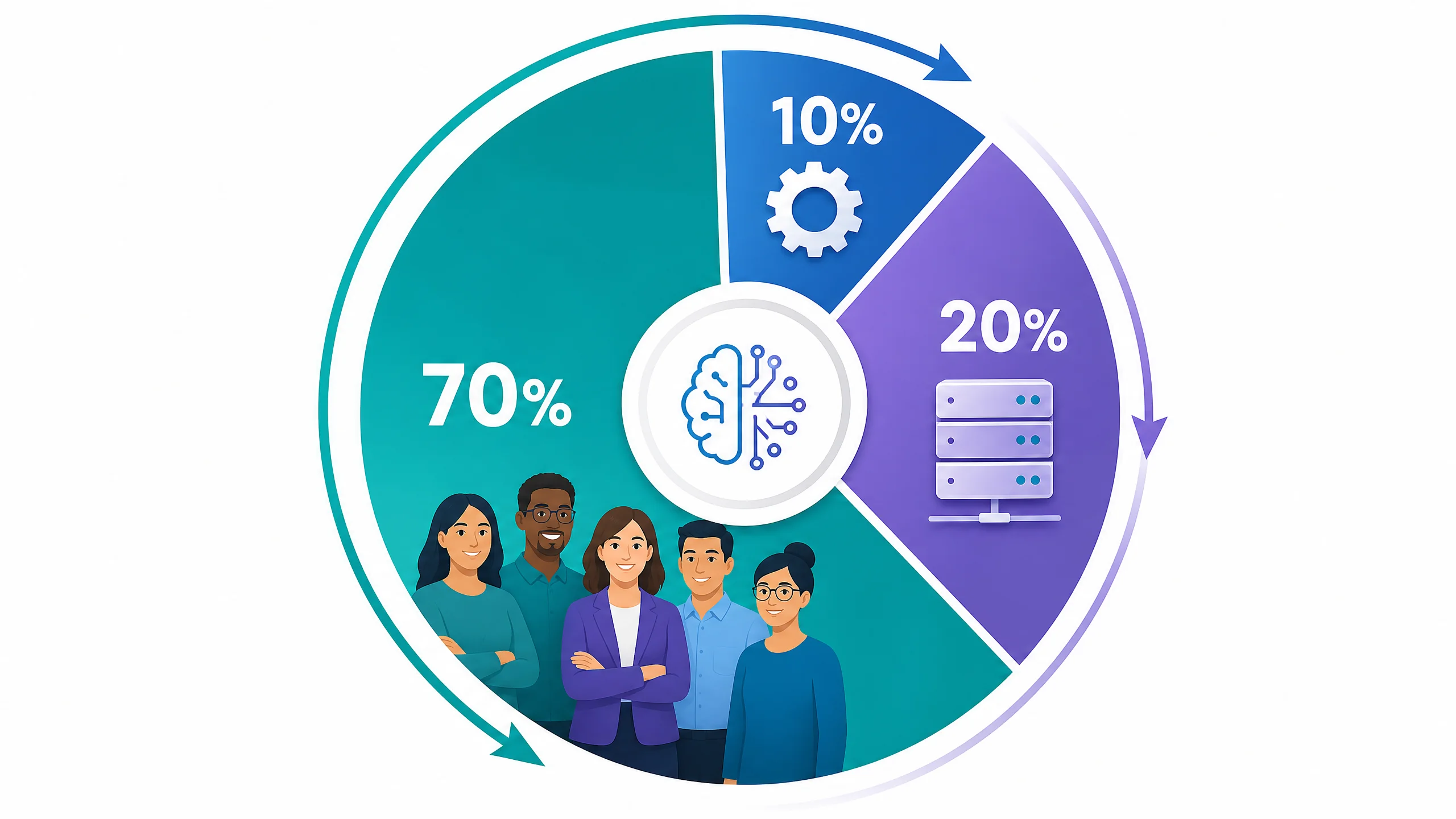
The 10/20/70 rule is a planning guideline from Boston Consulting Group (BCG). It says a company should put about 10% of its AI effort into algorithms, 20% into technology and data, and 70% into people and processes. In BCG's words, the "lion's share" of the work is not the model. It is changing how people actually work (BCG, The Leader's Guide to Transforming with AI).
10% Algorithms: Picking the model or tool. This is the smallest slice because good models are now widely available. 20% Technology and data: Connecting the tool to your systems, cleaning the data it reads, and setting up access. 70% People and process: Redesigning the workflow, training the team, deciding who owns the result, and checking it works week after week. What it measures: Effort and attention, not just budget. It tells you where your time will go if the rollout is going to stick. Where it comes from: BCG built it for large enterprises. It scales down to a small team, but the percentages are a guide, not a law.
If your AI tool looked great in the demo and then quietly stopped being used, this rule explains why. The demo was the 10%.
Most stalled rollouts follow the same path. Someone picks a tool, it works on a test case, and everyone agrees it's impressive. Then nobody changes the actual workflow. The team goes back to the old way because the old way is familiar and the new way has no owner.
The rule flips the order of worry. You stop asking "which AI tool is best?" and start asking "who will use this on a Tuesday afternoon, and what do they stop doing?" The rest of this post shows what the 70% looks like in a small company, with a worked example and a budget you can copy.
Table of Contents
- What each part of the rule means
- Why the 70% gets skipped
- How to apply 10/20/70 in a small company
- Who This Is For
- Frequently Asked Questions
- Conclusion
What each part of the rule means
Here is the split in plain terms, with what each slice looks like in a business with 10 to 100 people.
| Slice | What it covers | Small-company example |
|---|---|---|
| 10% algorithms | Choosing the model or tool | Deciding between ChatGPT, Claude, or a ready-made tool |
| 20% technology and data | Plumbing and inputs | Connecting the tool to your CRM, inbox and calendar; cleaning the contact list it reads |
| 70% people and process | Everything that makes it get used | Mapping the current steps, rewriting the process, training, naming an owner, reviewing results |
The 10%. Model choice matters less than people expect. For most business tasks, several current models do the job. Spending three weeks comparing them is the classic way to burn the 10% and feel productive.
The 20%. This is where projects get technical: logins, integrations, a messy spreadsheet that three people edit. It's real work, but it has a finish line. Once the data flows, you're done.
The 70%. This slice has no finish line, which is why it gets skipped. It includes deciding which step in the workflow disappears, who checks the AI's output, what happens when it's wrong, and how you will know in 30 days whether it's working.
The numbers behind the rule are sobering. In BCG's research, only about one in four companies has captured real value from AI. Just 22% have moved past proof of concept, and only 4% report substantial value (BCG). Those results are for large companies, but the pattern is the same one small teams describe: the tool works, and the change doesn't happen.
Why the 70% gets skipped
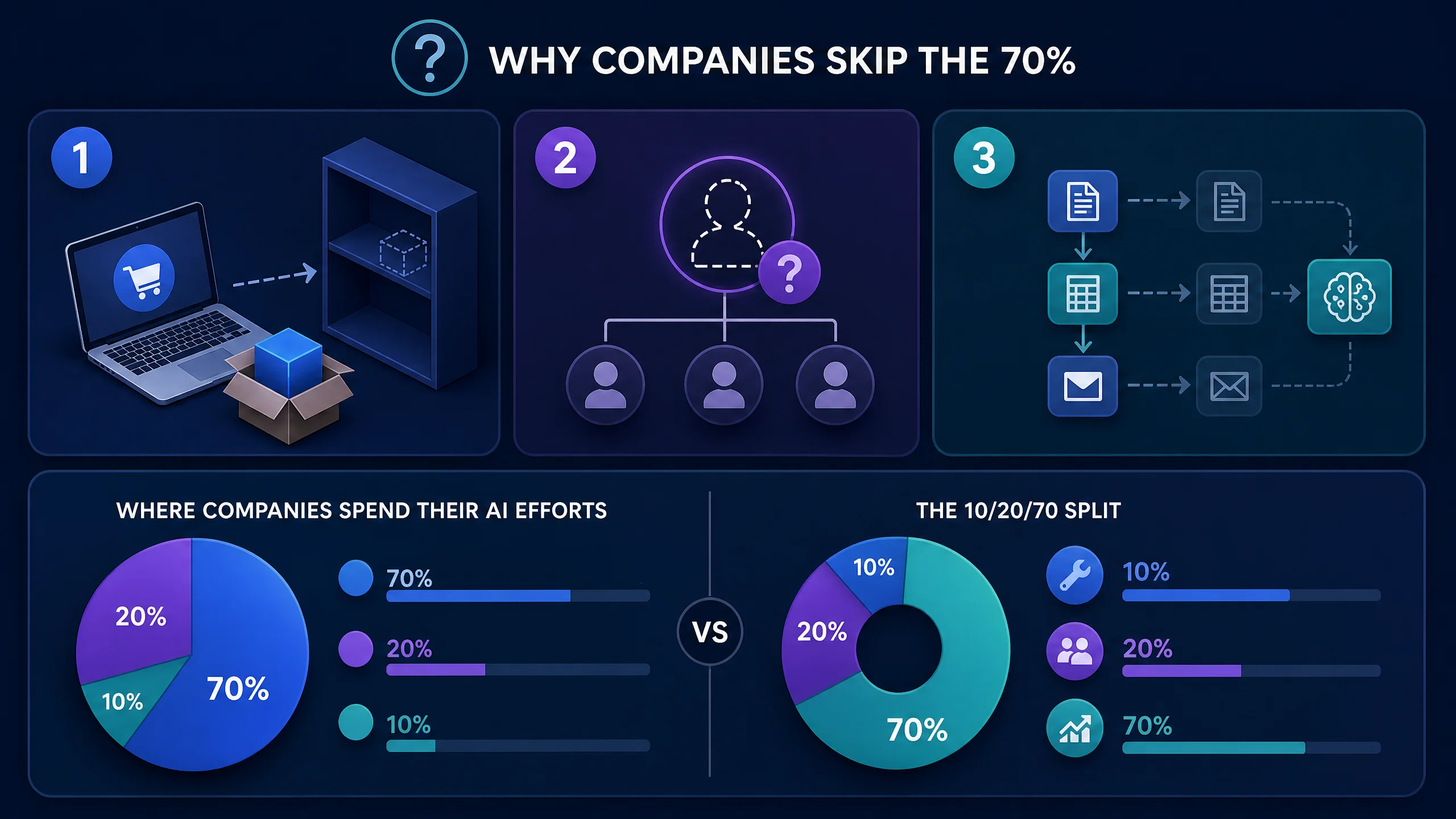
The 70% is skipped because it's the least exciting part and the hardest to buy. You can purchase a tool in an afternoon. You can't purchase a changed habit.
Three things usually go wrong.
1. The tool gets bought, not placed. Nobody decides where in the workflow it sits. So it sits next to the workflow instead of inside it.
2. No one owns the result. When the owner of a 30-person firm says "let's use AI for follow-ups," everyone nods. Nobody's job description changes. Within a month, the follow-ups are late again.
3. The old step never gets removed. AI is added on top of the manual process instead of replacing it. Now the team does both, which feels like more work, not less. They stop using the AI.
If any of these sound familiar, you're in good company, and it's fixable. It also helps to know the rule is not the same as a similar-looking one. The older 70-20-10 model is about how leaders learn: 70% from challenging experiences, 20% from relationships, 10% from coursework (Center for Creative Leadership). The AI rule has the numbers reversed in order and a different purpose.
If you want a rule for choosing what to automate first, rather than how to roll it out, see our guide to the 30% rule in AI. The two work together: the 30% rule picks the tasks, and 10/20/70 tells you how to spread your effort while you automate them.
How to apply 10/20/70 in a small company
You don't need a consulting engagement to use the rule. You need a budget of hours and the discipline to spend them in the right order.
Step 1: Pick one workflow, not "AI"
Choose a single repeatable process with a clear start and end. Quote follow-up, lead routing, invoice chasing and meeting notes all work. "Use AI across the company" does not.
Step 2: Set an effort budget in hours
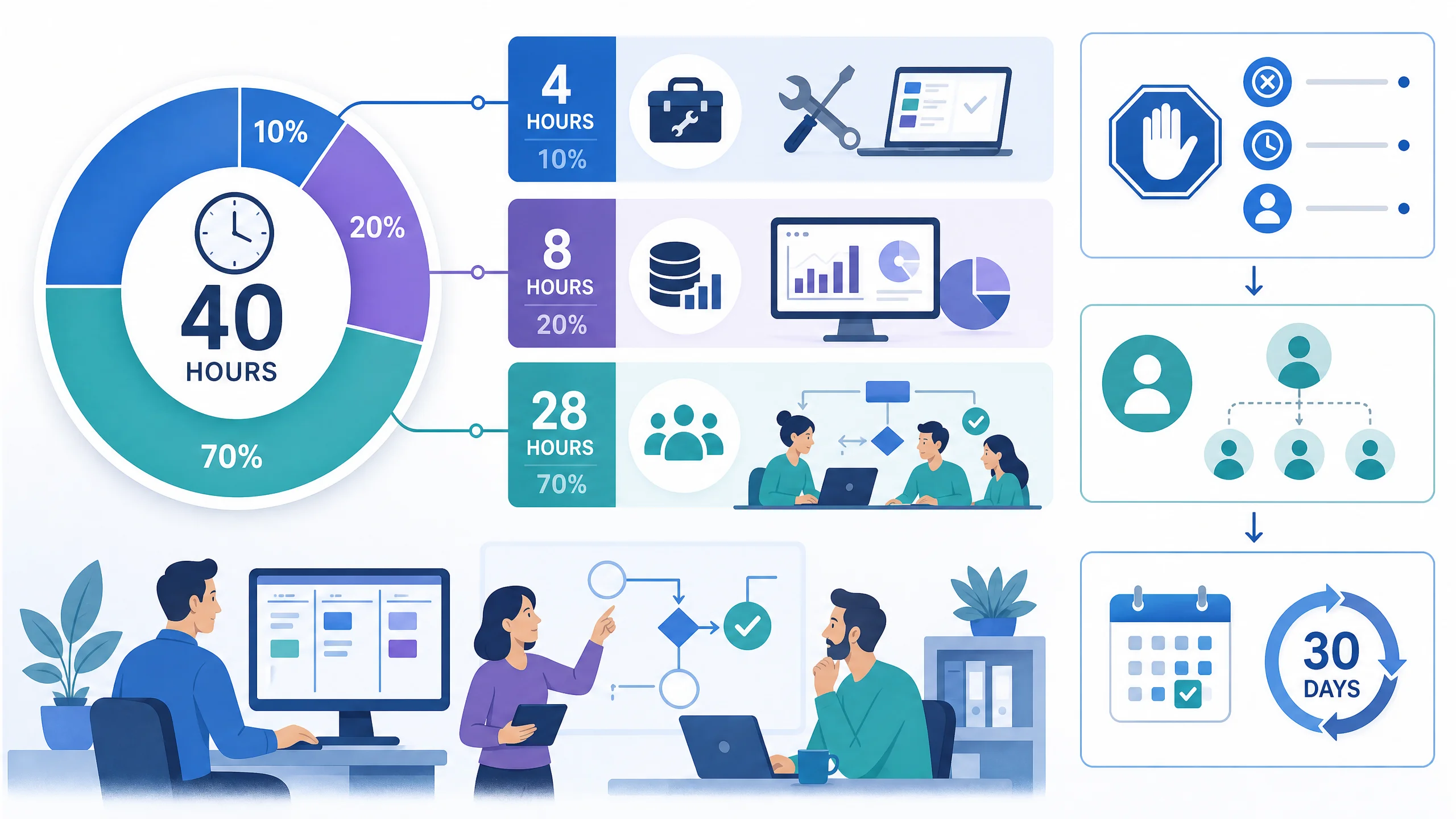
Here is an illustrative budget for rolling out an automated quote follow-up in a 25-person services company. These are planning estimates, not measured results. Adjust them to your own situation.
| Slice | Share | Hours (of 40) | What the hours buy |
|---|---|---|---|
| Algorithms | 10% | 4 | Test two tools on 20 real past quotes; pick one |
| Technology and data | 20% | 8 | Connect to CRM and email; clean the last 6 months of contacts |
| People and process | 70% | 28 | Map current steps (4), rewrite the process (6), train the two people involved (6), set review rules and an owner (4), review week 1 to 4 results (8) |
Notice that the "build" is only 12 of the 40 hours. The other 28 are why the rollout holds.
Step 3: Write down what stops
For every new step the AI does, name the old step that ends. If the salesperson used to write follow-ups by hand, the rule is now: they review and send, they don't write. If you can't name what stops, the AI is an add-on and will be ignored.
Step 4: Assign one owner and one number
Pick one person who owns the workflow, and one number that shows it's working. For quote follow-up that might be "share of quotes followed up within 24 hours." Check it weekly for the first month.
Step 5: Review at 30 days, then fix
Look at the number. Read ten real outputs. Fix the process, not just the prompt. Most problems at this point are about unclear rules ("when should it escalate?"), not model quality.
How AIessentials fits in
When we scope an automation, the first thing we check is not the tool. It's who touches the workflow today and which step goes away. That is the 70% done before the build starts. If you'd rather not spend the 28 hours yourself, that's what our B2B automation service covers, with automations priced from $300 to $3,747. And if you want to do it alone, the steps above are enough to try.
DIY, hire a person, or hire it built
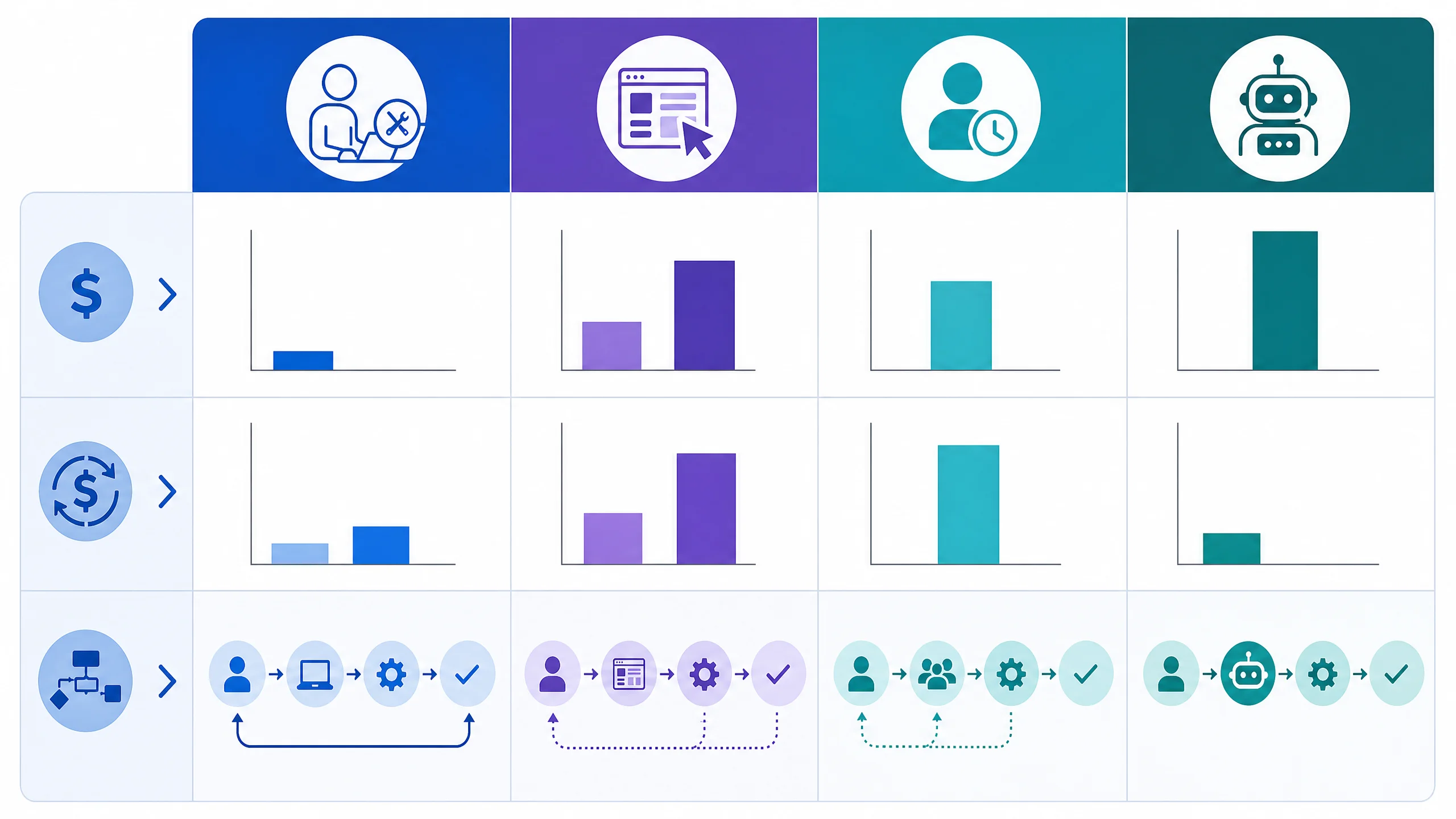
Here's an honest comparison for the quote follow-up example. Costs are rough planning figures.
| Option | Upfront | Ongoing | Where the 70% lands |
|---|---|---|---|
| DIY with a no-code tool | $0 to $50/month in tools; about 40 of your hours | Your time reviewing, 1 to 2 hours/week | On you |
| Hire a part-time coordinator | Recruiting time | About $1,500 to $3,000/month for 20 hrs/week | On them, but the task stays manual |
| Hire an automation built | $300 to $3,747 for one automation (our range) | Light review | Shared: we map and build, you own and review |
DIY is the right call if you have the hours and the workflow is simple. Hiring it built makes sense when the 28 process hours would pull you off the thing you actually run.
Who This Is For
This is ideal for:
- Owners whose AI tool worked in a demo and then went unused
- Teams about to buy an AI tool who want to budget time, not just money
- Operators asked to "roll out AI" with no plan for how people will change their work
Consider alternatives if:
- You're running a one-person business with no team to change. The rule is mostly about adoption, so a simple "try the tool for a week" test is enough
- You need an enterprise governance and risk framework. Use BCG's full material or a firm that works at that scale
Why AIessentials specifically? We start with the workflow, not the tool, and we scope for small and mid-sized B2B teams. Automations are priced from $300, and our guarantee is a 60-day money-back guarantee: if you don't get the outcomes we agree on upfront within 60 days of kickoff, we refund your service fee.
Frequently Asked Questions
Is the 10/20/70 rule the same as the 70/20/10 rule?
No. The 70-20-10 rule is a leadership learning model: 70% from challenging experiences, 20% from relationships, 10% from coursework. The 10/20/70 rule for AI is a BCG guideline about effort: 10% algorithms, 20% technology and data, 70% people and process. The numbers look alike, but they answer different questions.
How do you apply the 10-20-70 rule to AI implementation?
Pick one workflow and set a budget of hours. Spend about 10% choosing the tool, 20% connecting it to your systems and data, and 70% on the people side: map the current steps, remove the old step the AI replaces, train the users, name an owner, and review results weekly for the first month. If you can't name what stops, the AI becomes an add-on.
Conclusion
Three things to take away:
- The model is the small part. Plan for about 10% of your effort on the tool and 70% on the people and process around it.
- Budget hours, not just dollars. In a small rollout, most of the hours go to mapping, training and review.
- Name what stops. Every AI step needs an old manual step it replaces, and one person who owns the result.
If you want a second pair of eyes on which workflow to start with, book a free intro call. No pitch deck, just a look at where your effort should go.
Workflow Audit
]99% sure you are not seeing all the spots AI can help you in your business.
Are your workflows optimized with the most up to date solution, or are they costing you and your team time and money?
GET FREE AUDIT
Iliyan Ivanov
Founder of AIessentials · AI automation consultant helping B2B businesses save 20+ hours/week and grow without hiring