AI Marketing Automation vs. Hiring a Marketing Team
[ SUMMARIZE WITH AI ]
AI marketing automation costs a fraction of a full-time hire, operates 24/7, and handles repetitive tasks like email sequences, ad optimization, and social scheduling without breaks or burnout. But a dedicated marketing person brings creative judgment, real relationships, and strategic thinking that AI tools still can't replicate well. For most small businesses, the question isn't "which is better" — it's "which do you actually need right now?" If you're ready to buy rather than build, see where to buy AI-powered marketing services for your small business.

Marketing is the lifeblood of any small business, and you need to get it right without breaking the bank. The rise of tools like HubSpot, Mailchimp, and ActiveCampaign has made AI-powered marketing automation accessible to businesses that couldn't afford it five years ago. At the same time, good human marketers are increasingly hard to find and expensive to keep.
The stakes here are real. Hire too early and you're paying $55,000–$85,000 a year for someone who spends 40% of their time on tasks a $100/month tool could handle. Automate everything too soon and you end up with campaigns that feel robotic — quietly damaging the trust you've spent years building with customers.
This guide breaks down both options honestly: what each costs, where each wins, and a clear framework to help you decide.
AI Automation vs. Marketing Hire: Decision at a Glance (2026)
| Your situation | Best fit | Typical cost |
|---|---|---|
| Founder-led marketing, repetitive tasks dominate (email, social, follow-ups) | AI automation first | $50–$500/month in tools |
| Proven messaging, need execution at higher volume | AI automation + part-time oversight | $100–$500/month + a few hours/week |
| Need positioning, launches, or partnerships figured out | Marketing hire (full-time or fractional) | $55K–$85K/year full-time; $2K–$5K/month fractional |
| Scaling past capacity with strategy already working | Both — human runs strategy, AI runs execution | Hire + $200–$500/month in tools |
Current examples of what the automation side looks like in 2026: Klaviyo's AI-generated flows for e-commerce email, HubSpot's Breeze agents for lead nurture and content drafting, and Mailchimp's Intuit Assist for campaign copy. All three sit in the same $50–$500/month band the table assumes.
Want to know which marketing tasks you could automate right now — without sacrificing quality? We map out your current marketing workflows and show you exactly where automation saves time vs. where human judgment matters. Book a Free Strategy Call →
Table of Contents
- The Pros and Cons of AI Marketing Automation
- The Pros and Cons of Hiring a Marketing Team
- Cost Comparison and ROI: Breaking Down the Numbers
- How to Decide Which Option Fits Your Business
- Who This Is For (And Who Should Look Elsewhere)
- Frequently Asked Questions
The Pros and Cons of AI Marketing Automation
AI marketing automation refers to software that handles marketing tasks automatically — sending emails at the right time, posting to social media, running A/B tests, and scoring leads based on behavior. Platforms like HubSpot, Mailchimp, Klaviyo, and ActiveCampaign are the most common tools small businesses use to get this running.
What AI marketing automation does well
Speed and scale. An AI email tool can send 10,000 personalized messages in the time it takes a human to draft one. Once your sequences are configured, they run without you touching them.
24/7 consistency. Automation doesn't forget to follow up. Your lead nurture sequence runs on a Saturday night the same as a Tuesday morning — because it doesn't know the difference.
Low cost. Most small-business automation tools run $50–$500/month depending on list size and features. That's a fraction of what even a junior marketing hire costs annually.
Data and testing. AI tools track open rates, click rates, and conversion rates, and can automatically adjust campaigns based on what's working. A human would need hours to analyze the same data manually.
Execution at scale. Tools like ChatGPT and Jasper can draft social captions, email subject lines, and ad copy faster than any human first draft. Not always brilliantly — but fast enough to test more ideas.
Where AI marketing automation falls short
Strategic judgment. AI can optimize for the goal you set, but it can't figure out whether that's the right goal. If your messaging is off, automation scales the problem rather than solving it.
Brand voice and nuance. AI-generated content tends toward the generic. Customers notice when copy sounds assembled rather than written. Brand differentiation requires a human who understands your positioning deeply.
Relationship building. Long-term clients, referral partnerships, and speaking opportunities come from real human relationships. There's no email sequence that builds genuine trust the way a person can.
Complex campaign thinking. Planning a product launch, entering a new market, or navigating a reputation issue requires strategic thinking that current AI tools simply can't handle.
Setup investment. Getting automation to work well takes time upfront — often weeks of mapping workflows, writing copy, and testing before results become reliable.
According to HubSpot's State of Marketing research, businesses using marketing automation report an average 20% increase in sales opportunities — but that only holds when the automation is set up thoughtfully, not just turned on.
AIessentials helps small businesses avoid the most common automation trap: deploying tools before the strategy is ready. We audit your current workflows first, identify what's worth automating, and build the sequences that actually convert.
Ready to see what a properly set-up automation stack looks like for your type of business? We've built marketing automation systems for professional services, e-commerce, and local businesses. Let's map yours out. Get Your Free Workflow Assessment →
The Pros and Cons of Hiring a Marketing Team
A "marketing team" for a small business usually means one person — a marketing manager or specialist — who handles strategy, content, campaigns, and analytics. Sometimes it's a freelancer or a small agency. Each has different costs and capabilities, but they all share the same core advantage: human judgment.
What a human marketing hire brings
Strategic ownership. A good marketer doesn't just run the campaigns you tell them to. They push back when your messaging is wrong, identify opportunities you're missing, and take accountability for results.
Creative quality. Original ideas, compelling storytelling, and consistent brand voice — these are areas where skilled marketers still outperform AI tools by a meaningful margin.
Adaptability. When something breaks — a PR issue, an algorithm update, a competitor move — a human pivots in real time. Automation waits for someone to reprogram it.
Relationships. A marketing hire can build press relationships, pursue partnership conversations, and grow community presence. These outcomes don't flow from email sequences alone.
Deep context. A marketer who knows your business, your customers, and your industry brings context that no AI tool currently has access to. That context shapes every decision.
Where hiring falls short
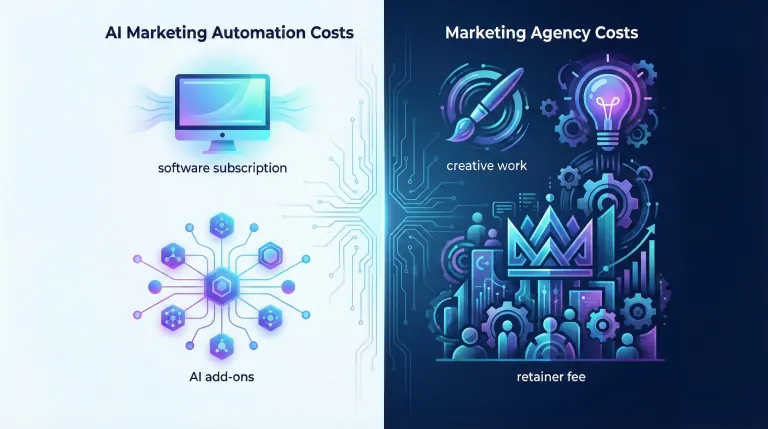
Cost. A mid-level marketing manager in the US earns $55,000–$85,000/year in salary. Add benefits, hiring costs, and tools, and the all-in cost reaches $70,000–$110,000 annually. Most small businesses can't justify this until revenue supports it.
Capacity limits. One person can only produce so much. During busy periods, campaigns slip. Follow-ups get missed. A person working 40 hours has a hard ceiling on output.
Consistency gaps. People take vacations, get sick, and eventually move on. When a solo marketing person leaves, they take institutional knowledge — your best-performing campaigns, your strategic context — with them.
Ramp-up time. A new hire takes 3–6 months to become fully productive. You're paying a full salary during that entire learning curve.
Mixed skill requirements. Marketing spans strategy, writing, design, analytics, and paid media. One person rarely excels at all of them, which means you're always prioritizing certain skills over others.
Mailchimp's email marketing benchmark research shows that email performance varies significantly by industry — a marketer who excels in one sector may underperform in yours. This is one reason AIessentials focuses on industry-specific workflow design, not generic automation templates dropped into every client account.
Curious whether you actually need a full-time hire, or if automation could handle 60% of what you'd hire for? We've helped business owners work through exactly this question — often saving $40K+ per year in the process. Book Your Free Consultation →
Cost Comparison and ROI: Breaking Down the Numbers
Here's how the two options compare in practice for a small business generating $1–5M in annual revenue.
Side-by-Side Comparison
| Factor | AI Marketing Automation | Full-Time Marketing Hire |
|---|---|---|
| Monthly cost | $100–$500 (tools) | $5,000–$8,000 (salary + benefits) |
| Setup time | 2–8 weeks | 3–6 months to full productivity |
| Execution speed | Instant (once configured) | Depends on workload |
| Creative quality | Moderate (improving) | High (with the right person) |
| Strategic thinking | None | High (with the right person) |
| Scalability | High (scales with configuration) | Limited by working hours |
| Risk | Tool dependency, requires maintenance | Turnover, knowledge loss |
A Sample ROI Scenario
Suppose you're a 10-person professional services firm generating $2M/year. You implement a marketing automation stack: HubSpot CRM ($450/month), an email tool ($100/month), and AI ad management ($200/month). Total: roughly $750/month, or $9,000/year.
With proper setup, this system handles lead nurturing, follow-ups, and ad optimization automatically. If it closes even 3 additional clients per year at $10,000 average deal value, that's $30,000 in revenue from a $9,000/year investment — a 233% ROI.
A marketing hire generating the same 3 clients would cost $70,000–$90,000 all-in. Same result, very different economics.
The caveat: Automation needs someone to set it up correctly and keep it maintained. If that's not you, you'll need outside help — which is a one-time investment, not an ongoing salary commitment. Not sure where to start? Our free AI Revenue and Savings Plan gives you a 1-page roadmap before you spend a dollar on tools or implementation.
For a deeper look at how automation saves time across different business functions, our post on how AI automation saves 20+ hours per week breaks down the numbers by business type.
Want these numbers applied to your actual business situation? We run a free 30-minute analysis showing estimated ROI from automation vs. the cost of hiring for your specific workflow. Start Your AI Assessment →
How to Decide Which Option Fits Your Business
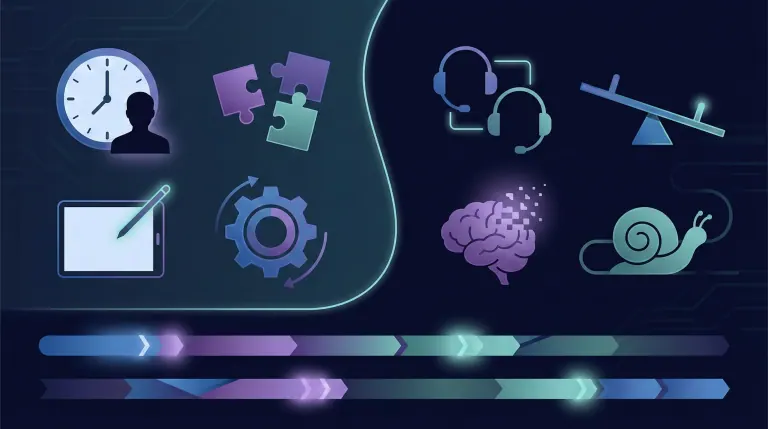
The right choice comes down to three questions: where you are in your growth stage, what your biggest marketing bottleneck actually is, and how much of your marketing work is repetitive vs. genuinely creative.
Choose automation first if:
- You're under $1.5M in annual revenue or still in early-growth phase
- Your main marketing gap is inconsistency — missed follow-ups, delayed emails, irregular posting
- You have a defined offer and customer journey but aren't executing it reliably
- You can't afford a full-time hire without the revenue to support it
Hire a marketer if:
- You're above $2M and growing fast, with real marketing complexity across multiple channels
- Your biggest gap is strategy, positioning, or creative quality — not execution volume
- You've maxed out what automation can handle and need a human to set direction
- Brand differentiation in your industry depends on storytelling and relationship-driven marketing
The honest answer for most small businesses:
Automate first, then hire. Get your systems running, generate more consistent revenue, and bring in a marketer to lead strategy while automation handles execution. This is how you avoid paying a person $75,000/year to write emails a $100/month tool could send just as well.
You can also explore how the lead generation side of automation works in our guide on AI lead generation automation for B2B companies — which covers how automated systems qualify and nurture leads before a human ever gets involved.
Who This Is For (And Who Should Look Elsewhere)
This approach — automation-first — is ideal for:
- Small businesses under $3M in revenue that need consistent marketing output without full-time headcount costs
- Founders currently doing all the marketing themselves and burning out trying to keep up
- Businesses with a predictable customer journey (lead → call → proposal → close) that repeats consistently
- Service businesses where email follow-up and lead nurturing are the primary marketing levers
You might want to consider a human hire first if:
- Your marketing is genuinely creative-intensive (high-end design, luxury goods, entertainment brands where feel matters more than volume)
- You operate in a relationship-driven industry where automation comes across as impersonal to customers
- You've tested automation tools and found the setup complexity overwhelming without dedicated technical support
- Your biggest marketing gap is strategy — you don't have a clear offer, positioning, or customer journey yet to automate
Why AIessentials specifically? AIessentials is a done-for-you AI automation provider for small and mid-size B2B businesses. Most AI consultants focus on enterprise deployments. We work specifically with small and medium businesses — which means we know the tools that are actually practical at your revenue stage and budget, not enterprise platforms designed for 500-person marketing departments. We implement for you rather than just advising — so you get a working system in 14–30 days, not a 90-page strategy deck to execute yourself. And we stand behind results: if you don't see measurable improvement, we don't call it done.
Frequently Asked Questions
AI-powered marketing automation vs dedicated marketing team small business
The best choice depends on your revenue stage and marketing needs. Automation handles consistency, follow-up, and execution at scale. A human team handles strategy, creative quality, and complex campaigns. Most small businesses under $2M should start with automation and bring in a strategist once revenue justifies it. The two work best together — automation for execution, human for direction.
What are the pros and cons of AI-powered marketing automation for small businesses?
Pros: low monthly cost ($50–$500), runs 24/7, scales without adding headcount, tracks performance automatically. Cons: requires proper setup time, can't replace strategic thinking, produces generic content without careful customization, and may feel impersonal in relationship-heavy industries. Best results come when automation handles repetitive execution while a human owns the strategy and creative direction.
What does AI marketing automation cost vs. hiring a marketing team for a small business?
AI automation tools typically cost $100–$750/month for a small business stack, plus a one-time setup investment of $2,000–$8,000 depending on complexity. A full-time marketing hire costs $55,000–$85,000/year in salary alone, with all-in costs reaching $70,000–$110,000. Over two years, most small businesses save $60,000–$150,000 by using automation for execution rather than relying solely on a full-time hire.
What's the ROI of AI marketing automation for a small business?
ROI depends heavily on what marketing gaps you're closing. Businesses that implement automated follow-up sequences typically see 15–30% more conversions from the same lead volume — simply because no one falls through the cracks anymore. If your average client value is $5,000 and automation closes 3 additional deals per year, that's $15,000 in revenue from a $1,500/year tool investment — before accounting for time savings on the execution side.
What are the most common mistakes with AI marketing automation for small businesses?
The biggest mistake is setting it up and forgetting about it. Stale sequences, broken integrations, and outdated offers quietly erode performance over time. Other frequent mistakes: over-automating until customers feel like numbers, under-personalizing (first name alone isn't personalization), and not tracking which sequences produce revenue vs. just opens and clicks. Monthly reviews prevent most of these issues.
What are AI marketing automation best practices for small businesses?
Start with one workflow — usually lead nurture or new inquiry follow-up — and get it right before expanding. Prioritize sequences that directly affect revenue, not just visibility. Review performance monthly and update copy quarterly. Always have a human spot-check AI-generated content before it goes live. And connect your automation to real CRM data so you can tie activity to actual deals closed, not just email metrics.
What are the recent trends in AI marketing automation for small businesses?
The biggest 2025–2026 trend is AI-powered hyper-personalization — tools can now adjust email content and ad creative based on individual behavior patterns, not just audience segments. Conversational AI that qualifies leads in real time is also improving rapidly and becoming accessible at small-business price points. All-in-one platforms like GoHighLevel and HubSpot Starter are bundling CRM, email, and automation at price points that were enterprise-only two years ago.
What are the alternatives to AI marketing automation and hiring a marketing team?
Alternatives include: freelancers and fractional marketers (lower cost than full-time, variable quality and availability), marketing agencies (higher cost, handle strategy and execution, but usually require long onboarding periods), and manual DIY marketing (lowest dollar cost, highest time cost). For most small businesses, a hybrid approach works best — automation for execution, a part-time consultant or fractional CMO for strategic direction.
What's the step-by-step guide to implementing AI marketing automation for a small business?
Step 1: Map your current customer journey from first contact to close. Step 2: Identify where leads fall through the cracks — usually follow-up. Step 3: Choose a platform that fits your CRM and email needs (HubSpot, ActiveCampaign, and Mailchimp are common starting points). Step 4: Build your first email sequence (5–7 emails for new leads). Step 5: Connect to your lead sources. Step 6: Monitor for the first 30 days and adjust. Step 7: Expand to additional workflows once the first one is producing consistent results.
Are there real case studies of AI marketing automation working for small businesses?
Yes. A common example: a 6-person consulting firm implements a lead nurture sequence for new inquiries. Before automation, 40% of leads who didn't book immediately were lost. After a 7-email follow-up sequence, 22% of those leads re-engaged, resulting in 4–6 additional clients per quarter. For a firm charging $3,500 per engagement, that's $14,000–$21,000 in quarterly revenue from a system that cost $400 to set up and $150/month to maintain.
Conclusion
AI marketing automation and hiring a marketing team aren't mutually exclusive. But for most small businesses, the sequence matters: automate first, then hire. Get consistent execution running, generate more predictable revenue, and bring in a strategist once the budget supports it.
The goal isn't to replace marketers. It's to make sure you're not paying someone $75,000 a year to handle tasks that a $150/month tool can do just as well.
Ready to map out what your marketing automation could look like? Book a free 30-minute strategy call to see which tasks you could automate today — and what the numbers look like for your specific business.
Workflow Audit
]99% sure you are not seeing all the spots AI can help you in your business.
Are your workflows optimized with the most up to date solution, or are they costing you and your team time and money?
GET FREE AUDIT
Iliyan Ivanov
Founder of AIessentials · AI automation consultant helping B2B businesses save 20+ hours/week and grow without hiring